
- Specialities
- Urology
- Gynaecology
- Proctology
- Aesthetics
- Orthopedics
- Fertility
- Ent
- Vascular
- Ophthalmology
- Dermatology
 080-6542-3714
Diabetic-retinopathy Treatment in Bulandshahr
Treatment & Care
Advanced laser therapy for effective diabetic retinopathy treatment in bulandshahr ensures superior vision care and eye health.

 Call Us: 080-6542-3714
Advanced Diabetic Retinopathy Care in Bulandshahr Available Now.
Prolonged high blood sugar can cause diabetic retinopathy, a severe eye condition damaging retinal blood vessels. Early detection and effective treatment are crucial to maintain vision and halt progression. In bulandshahr, advanced treatments for diabetic retinopathy include laser photocoagulation, anti-VEGF injections, and minimally invasive vitrectomy. These methods provide high success rates in managing retinal damage. Most patients return to their routine activities within a few days after treatment. Prompt intervention using safe, modern techniques significantly safeguards long-term eye health.
Alert: Indicators of Diabetic Retinopathy to Watch For.
Identifying early diabetic retinopathy symptoms is crucial for prompt eye care and vision preservation.

Vision Blur
Central vision becomes gradually hazy.

Vision Floaters
Spots or strings appear in your sight.

Loss of Vision
Eyesight loss can be sudden or partial.

Altered Colors
Colors may seem faded or washed out.

Vision Dark Spots
Dark or empty patches in your vision.

Nighttime Vision Issues
Struggle to see clearly in dim light.


Warning Signs of Severe diabetic-retinopathy
Seek Emergency Care Immediately if:
Seek Emergency Care Immediately if:
 Urgent eye care is needed for sudden vision loss. Immediate surgery is required for retinal detachment. Prompt treatment is essential for vitreous hemorrhage. Urgent care is demanded for severe macular edema. Emergency help is needed for neovascular glaucoma.
- Urgent eye care is needed for sudden vision loss.
- Immediate surgery is required for retinal detachment.
- Prompt treatment is essential for vitreous hemorrhage.
- Urgent care is demanded for severe macular edema.
- Emergency help is needed for neovascular glaucoma.
 MEDICAL INSIGHT
Factors leading to diabetic retinopathy development.
Prolonged elevated blood sugar levels cause diabetic retinopathy by harming retinal blood vessels. Major risk factors are unmanaged diabetes, high blood pressure, and elevated cholesterol levels.
Persistent high blood glucose weakens retinal capillaries, leading to leakage and gradual vision impairment.
 Elevated Glucose Levels
 High Blood Pressure
 Elevated Lipid Levels
 Chronic Diabetes Condition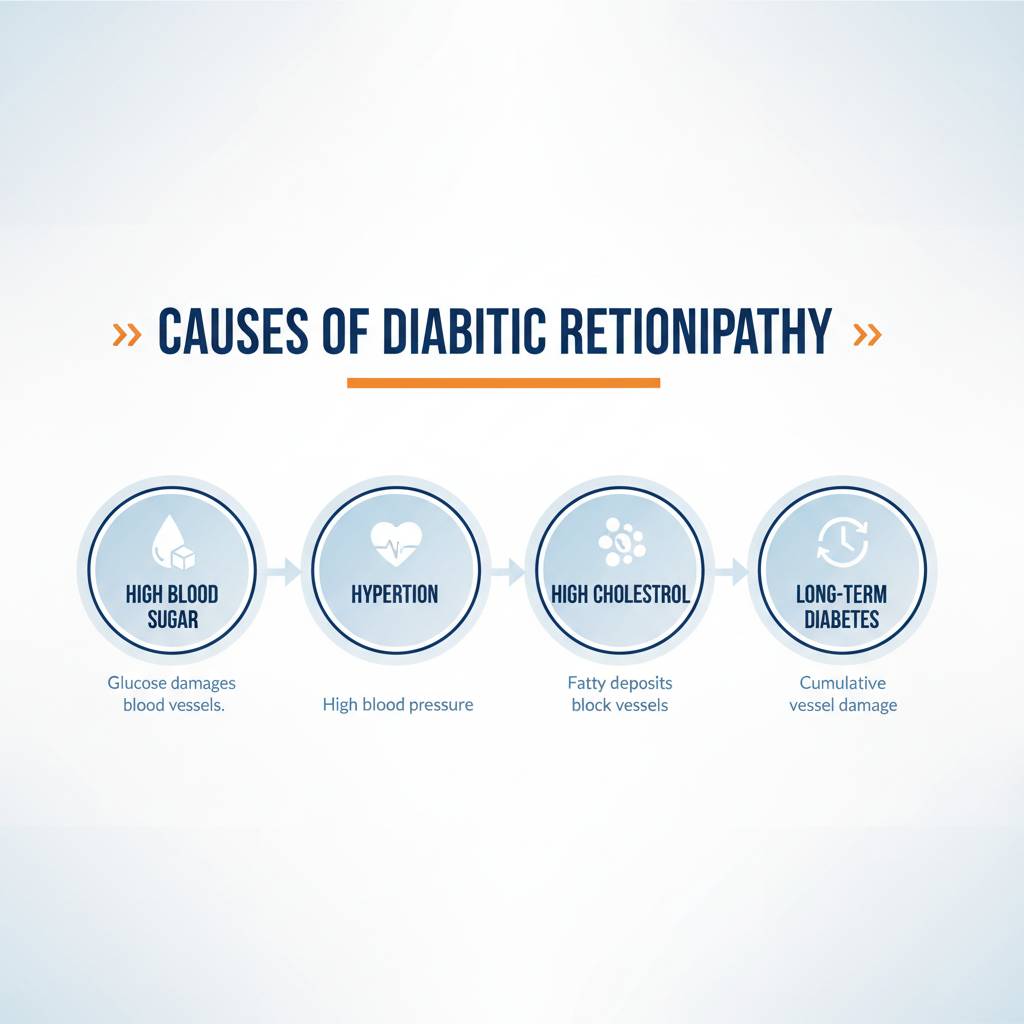
Ready to get the right care?
At-Risk Individuals?
Identify critical diabetic retinopathy risk factors for effective vision and eye health protection.

Diabetics with long-term condition
Those with type 1 or type 2 diabetes over a decade face elevated retinal damage risk.

Inadequate blood sugar management
Elevated blood glucose levels significantly heighten diabetic eye disease progression risk.

Elevated blood pressure levels
Combined hypertension and diabetes expedite retinal vessel damage, increasing vision loss risk.

Diabetic women during pregnancy
Pregnancy-related changes may exacerbate diabetic retinopathy, necessitating close monitoring.

The Critical Phase
Timely diagnosis and modern laser-assisted treatments can effectively manage issues, safeguarding vision for most patients.
ALWAYS HOSPITALIZE HIGH-RISK PATIENTS
Diabetic Retinopathy Complications: A Serious Concern
If left untreated, diabetic retinopathy may result in severe eye issues, such as vision impairment and lasting retinal harm.

Loss of Vision
Untreated diabetic retinopathy can progressively damage the retina, leading to partial or total vision loss.

Detachment of Retina
Scar tissue from abnormal blood vessels can cause retinal detachment, resulting in severe visual impairment.

Increased Glaucoma Risk
Blocked fluid drainage from new vessel growth raises eye pressure, heightening the risk of diabetic glaucoma.

 Nearest Clinic
Diabetic Retinopathy: Treatment and Recovery Insights
Explore advanced, effective treatments for managing diabetic retinopathy and safeguarding vision.

Laser treatment
Effective sealing of leaking vessels via laser photocoagulation.

Anti-VEGF injections
Swelling reduction and abnormal vessel growth control.

Vitreous removal surgery
Safe removal of blood from vitreous using minimally invasive methods.


Advanced In-Patient Care
Enhanced hospital care features ongoing glucose tracking, retinal scans, and expert-guided post-surgery assistance for quicker healing.
 CRITICAL ALERT
Elevated blood sugar levels can exacerbate diabetic retinopathy. Prompt medical attention is crucial for vision changes.
 Avoid Smoking
 Prevent Sugar Spikes
 No Missed Medications
Consult a professional before any medication.
Urgent: Take immediate action for diabetic retinopathy.
If diabetic retinopathy causes sudden vision changes, seek eye care promptly.
 Emergency Hotline


Guard against diabetic retinopathy through proactive prevention.
Adopting early measures and maintaining healthy habits significantly lowers the risk of diabetic retinopathy.

Manage Blood Glucose
Stable glucose levels safeguard retinal vessels from harm.

Check Blood Pressure
Control blood pressure to reduce retinal issue risks.

Frequent Eye Checks
Yearly dilated eye exams aid early detection and care.

Adopt Healthy Habits
Regular exercise and balanced diet promote eye health.
What Our Patients Say
Based on 12 Recommendations | Rated 4.8 Out of 5



Your health is our
sole priority.
Need Expert Medical Consultation?
Our network of diabetic-retinopathy specialists are available for immediate clinical evaluation and personalized recovery planning.

Frequently Asked Questions
Effective diabetic retinopathy treatments include laser therapy, anti-VEGF injections, and vitrectomy, which help manage retinal damage and preserve vision in most patients.
Laser-assisted treatment is a minimally invasive, proven method for diabetic retinopathy, effectively sealing leaking blood vessels and slowing disease progression with high success rates.
 Call Us
 Book Appointment


