
- Specialities
- Urology
- Gynaecology
- Proctology
- Aesthetics
- Orthopedics
- Fertility
- Ent
- Vascular
- Ophthalmology
- Dermatology
 080-6542-3714
Embryo-transfer Treatment in Kandhla
Treatment & Care
Effective embryo transfer treatment in kandhla provides high success rates and compassionate fertility care for IVF.

 Call Us: 080-6542-3714
Advanced Embryo Transfer Services Available in kandhla .
In kandhla, embryo transfer, a crucial part of IVF, involves the precise placement of a fertilised embryo into the uterus to establish pregnancy. This procedure is conducted using cutting-edge, minimally invasive methods by skilled fertility experts. It is a secure, proven treatment with high success rates for couples dealing with infertility. Most patients return to their regular activities within a day or two post-procedure.
Post-Embryo Transfer: Be Alert for Warning Signs
Monitor for symptoms and seek medical advice if they arise

Significant bleeding noted
Noticeable bleeding beyond light spotting

Pronounced cramping experienced
Severe discomfort or pain in pelvis

Elevated fever detected
Body temperature exceeding 100.4°F

Abnormal vaginal discharge
Discharge with odor or unusual color

Feeling bloated and nauseous
Rapid and severe abdominal swelling

Experiencing dizziness or fainting
Feeling lightheaded or unbalanced


Warning Signs of Severe Embryo-Transfer
Seek Emergency Care Immediately if:
Seek Emergency Care Immediately if:
 Intense ovarian hyperstimulation post-transfer Significant vaginal bleeding after transfer Severe pelvic infection or elevated fever Ectopic pregnancy causing intense pelvic pain Abrupt and severe abdominal cramping
- Intense ovarian hyperstimulation post-transfer
- Significant vaginal bleeding after transfer
- Severe pelvic infection or elevated fever
- Ectopic pregnancy causing intense pelvic pain
- Abrupt and severe abdominal cramping
Meet Our Best Embryo-Transfer Specialists

Dr. Prerna Gupta
MBBS, MD-Obs & Gynecologist
 Free Consultation
 22 Years Experience
 Pristyn Care Ferticity, Malviya Nagar, New Delhi
 MEDICAL INSIGHT
Reasons for undergoing the embryo transfer procedure.
Embryo transfer is a method, not a condition. It is performed due to infertility issues such as ovulatory problems, tubal issues, or male infertility.
Globally, 1 in 6 couples face infertility, often necessitating assisted reproductive methods like embryo transfer.
 Irregular ovulation cycle
 Damaged fallopian tubes
 Male fertility issues
 Inherited genetic conditions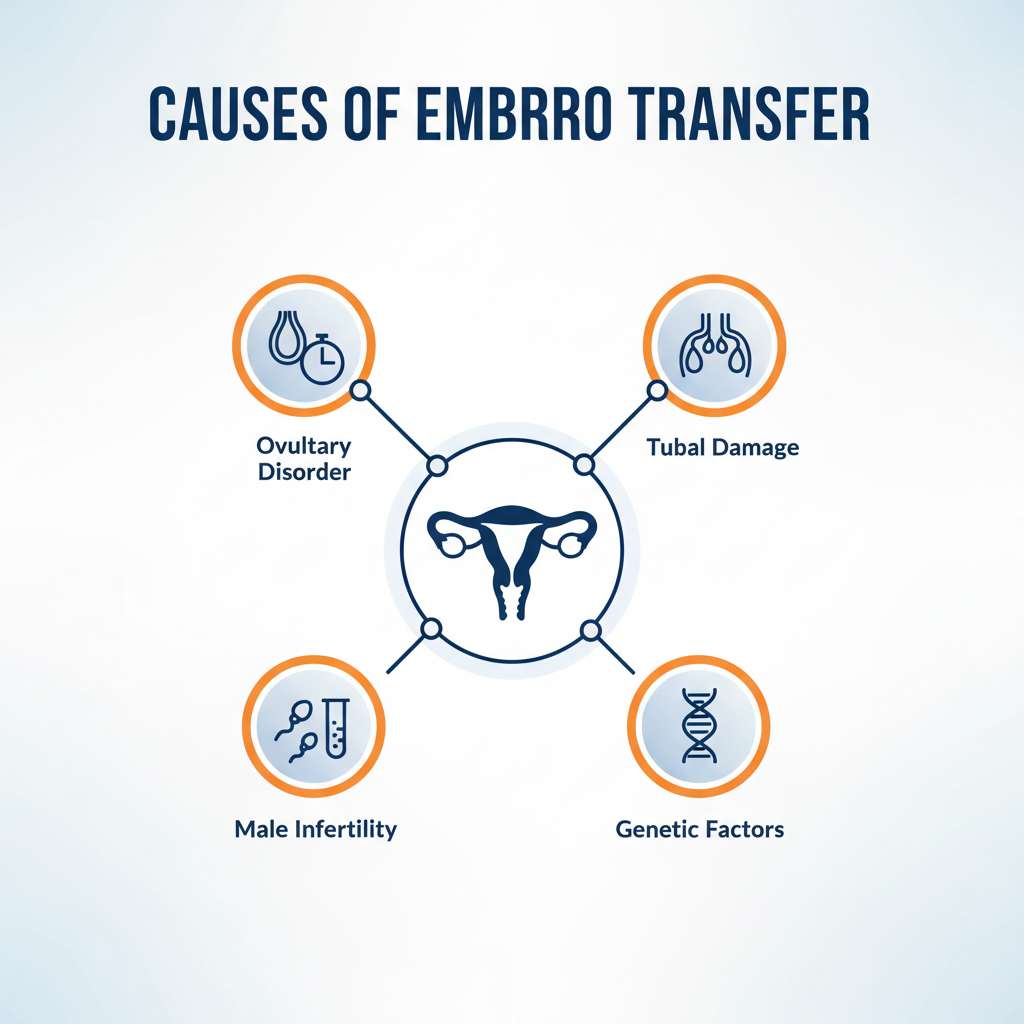
Ready to get the right care?
At-Risk Individuals?
Some people may encounter greater difficulties during embryo transfer, requiring specialized medical assistance.

Enhanced maternal age considerations
Reduced egg quality in women over 35 may lower implantation success.

Uterine issues affecting implantation
Fibroids, polyps, or thin uterine lining can hinder embryo implantation.

Repeated embryo transfer failures
Multiple failed IVF cycles may need further evaluation and treatment.

Hormonal issues impacting fertility
PCOS or thyroid disorders can influence embryo development and transfer.

The Critical Phase
Report any unusual pain, heavy bleeding, or fever to your doctor during the two-week wait.
ALWAYS HOSPITALIZE HIGH-RISK PATIENTS
Possible issues
Awareness of potential complications aids informed decisions about embryo transfer.

Ovarian stimulation risk
Hormonal prep before transfer can cause bloating, nausea, or abdominal discomfort in some patients.

Risk of multiple births
Transferring multiple embryos raises the chance of twins or triplets, increasing pregnancy risks.

Failed embryo implant
Sometimes, embryo fails to implant, necessitating further transfer cycles for a successful pregnancy.

 Nearest Clinic
Recovery & Treatment
Understanding Your Embryo Transfer: Procedure and Aftermath

The Embryo Transfer
A slender catheter carefully inserts the embryo into the uterus.

Care After Transfer
Rest is recommended; most patients return to light activities in a day.

Subsequent Testing
A blood test for pregnancy is planned 10–14 days post-transfer.


Advanced In-Patient Care
Our experts employ cutting-edge ultrasound-guided methods for secure, accurate embryo transfer, enhancing success rates.
 CRITICAL ALERT
Refrain from specific drugs and vigorous exercise post-embryo transfer.
 Avoid Ibuprofen
 Avoid Heavy Lift
 Avoid Hot Baths
Consult a professional before any medication.
Urgent Action Needed
If severe symptoms arise post-embryo transfer, seek emergency care.
 Emergency Hotline


Prevention: Optimal Defense for Health and Well-being.
Thorough preparation greatly enhances embryo transfer success rates.

Adopt a healthy lifestyle
Ensure a balanced diet and healthy weight prior to the transfer.

Refrain from smoking
Cease smoking and reduce alcohol for higher implantation success.

Control stress levels
Engage in relaxation methods to lower stress during IVF.

Adhere to medication
Follow your doctor's advice and take hormonal meds timely.


Your health is our
sole priority.
Need Expert Medical Consultation?
Our network of Embryo-Transfer specialists are available for immediate clinical evaluation and personalized recovery planning.

Frequently Asked Questions
A crucial part of IVF, embryo transfer involves placing a fertilized embryo into the uterus using a minimally invasive, swift method aimed at successful implantation.
Embryo transfer generally causes little discomfort. It is usually done without anesthesia and is well tolerated, much like a standard gynecological examination.
 Call Us
 Book Appointment


